

Did you know that nearly 75 percent of users judge a brand’s credibility based on website design alone? In e-commerce, design shapes first impressions, builds trust, and guides shoppers from curiosity to checkout. A thoughtful layout and seamless navigation can mean the difference between a thriving online store and abandoned shopping carts. Successful design not only grabs attention but also makes every step of the shopping journey feel effortless and enjoyable.
Key Takeaways
| Point | Details |
|---|---|
| Importance of Design | Design in e-commerce is essential for creating user-centered experiences that enhance customer engagement and facilitate smoother transactions. |
| Core Design Types | Fundamental design types—visual, UX, and conversion-oriented—each address specific user needs and contribute to overall platform performance. |
| User Experience Principles | Effective UX principles emphasize intuitive navigation, responsive design, and fast loading to create enjoyable browsing and shopping experiences. |
| Impact on Sales and Loyalty | Well-executed design not only boosts conversion rates but also fosters brand loyalty by building trust and reducing decision-making friction. |
Table of Contents
- Defining The Role Of Design In E-Commerce
- Key Design Types For E-Commerce Platforms
- Essential User Experience Principles For Online Stores
- Impact Of Design On Sales And Brand Loyalty
- Common E-Commerce Design Mistakes To Avoid
Defining the Role of Design in E-Commerce
Design in e-commerce is far more than aesthetic decoration. It represents the strategic architecture that transforms digital shopping experiences from transactional interactions into compelling, user-centered journeys. At its core, design bridges the psychological gap between online browsing and meaningful customer engagement.
In practical terms, e-commerce design encompasses multiple critical dimensions. These include visual design, which establishes immediate brand credibility, user experience (UX) design that ensures intuitive navigation, and conversion-oriented interface elements that guide customers smoothly through purchase decisions. A well-designed e-commerce platform doesn’t just display products - it tells a story, creates emotional connections, and reduces friction in the buying process.
- Visual hierarchy guides user attention
- Consistent color schemes build brand recognition
- Responsive layouts ensure seamless mobile experiences
- Intuitive navigation reduces cart abandonment
- Strategic placement of call-to-action buttons increases conversions
The ultimate goal of design in e-commerce transcends aesthetic appeal. It’s about creating digital environments that feel natural, trustworthy, and effortless. Read our comprehensive guide on web design platforms to understand how strategic design choices can dramatically impact online retail performance. Successful e-commerce design transforms passive browsers into active, enthusiastic customers by making every interaction feel personalized, smooth, and enjoyable.
Key Design Types for E-Commerce Platforms
E-commerce platforms demand nuanced design approaches that go far beyond simple webpage creation. Strategic design types serve as critical frameworks that transform online shopping experiences from basic transactional interfaces into sophisticated, user-centric digital environments. Each design type addresses specific user needs and business objectives, creating holistic digital ecosystems.
Core Design Types
Here’s a comparison of core e-commerce design types:
| Design Type | Primary Focus | Key Benefits |
|---|---|---|
| Visual Design | Brand identity Aesthetics |
Builds trust Boosts recognition |
| User Experience (UX) | Navigation Interactions |
Reduces friction Increases satisfaction |
| Conversion-Oriented | Purchase flow CTAs |
Raises conversions Guides decisions |
Three fundamental design types dominate successful e-commerce platforms:
- Visual Design: Creates immediate aesthetic appeal and brand identity
- User Experience (UX) Design: Ensures intuitive, frictionless navigation
- Conversion-Oriented Design: Strategically guides users toward purchasing decisions
Visual design establishes brand personality through color schemes, typography, and imagery. UX design focuses on seamless interactions, reducing cognitive load and simplifying complex purchase journeys. Conversion-oriented design employs psychological principles to nudge users toward completing transactions, using strategic placement of elements like product recommendations, clear pricing, and compelling call-to-action buttons.

Performance and Interaction Layers
Modern e-commerce design transcends static presentations. Interactive design elements create dynamic, personalized experiences that adapt to individual user behaviors. This includes features like real-time product customization, adaptive recommendations, and immersive product visualization technologies. Explore our development insights to understand how these design layers interconnect to create compelling digital shopping experiences.
Successful e-commerce platforms recognize that design is not just about looking good - it’s about creating intuitive, engaging digital environments that understand and anticipate user needs. By masterfully combining visual appeal, user-centric navigation, and conversion psychology, platforms can transform casual browsers into loyal customers.
Essential User Experience Principles for Online Stores
User experience (UX) in online stores represents the critical intersection between digital design and customer satisfaction. According to research from Plerdy, successful e-commerce platforms prioritize clear navigation, responsive design, and intuitive interactions that transform browsing into a seamless, enjoyable journey.
Core UX Principles
Effective e-commerce UX revolves around several fundamental principles:
- Intuitive Navigation: Clear, logical pathways that help users find products effortlessly
- Mobile Responsiveness: Adaptive designs that work perfectly across all device types
- Fast Loading Times: Minimizing wait periods to prevent user frustration
- Simplified Checkout Process: Reducing steps and eliminating unnecessary friction
- Clear Product Information: Transparent, comprehensive details that build user trust
Psychological design elements play a crucial role in user engagement. Color schemes, typography, and strategic placement of call-to-action buttons can significantly influence user behavior and purchasing decisions. Check out our modern website design tips to understand how subtle design nuances can dramatically improve user experience.
Ultimately, exceptional UX transforms online stores from transactional platforms into engaging digital experiences. By understanding and implementing user-centric design principles, businesses can create intuitive, enjoyable shopping environments that not only meet but anticipate customer needs, turning casual browsers into loyal, repeat customers.
Impact of Design on Sales and Brand Loyalty
Design is no longer a peripheral element in e-commerce - it’s a critical driver of business performance and customer relationships. According to an academic study published in the sustainability research journal, design elements directly correlate with usability, customer satisfaction, and ultimately, brand loyalty and sales performance.
Psychological and Economic Dimensions
Design influences purchasing decisions through multiple interconnected mechanisms:
- Visual Trust Signals: Professional design builds immediate credibility
- Emotional Connection: Aesthetic experiences trigger positive brand associations
- Cognitive Ease: Intuitive interfaces reduce decision-making friction
- Perceived Value: High-quality design suggests superior product quality
- Competitive Differentiation: Unique design helps brands stand out
The economic implications are profound. Well-designed interfaces can reduce cart abandonment, increase conversion rates, and foster long-term customer retention. Strategic design elements like color psychology, typography, and visual hierarchy subtly guide user behaviors, transforming casual browsers into committed customers. Explore our case studies on design impact to understand how thoughtful design translates into tangible business outcomes.
Ultimately, design in e-commerce transcends aesthetic preferences. It’s a sophisticated communication tool that speaks directly to user subconscious, building trust, reducing friction, and creating memorable brand experiences that drive sustainable business growth.
Common E-Commerce Design Mistakes to Avoid
Design pitfalls can silently sabotage even the most well-intentioned e-commerce platforms, transforming potentially lucrative digital storefronts into user-repelling experiences. Understanding and proactively addressing these common design mistakes becomes crucial for maintaining competitive edge and ensuring sustainable online business performance.
Critical Design Missteps
E-commerce platforms frequently encounter design challenges that compromise user experience and conversion potential:
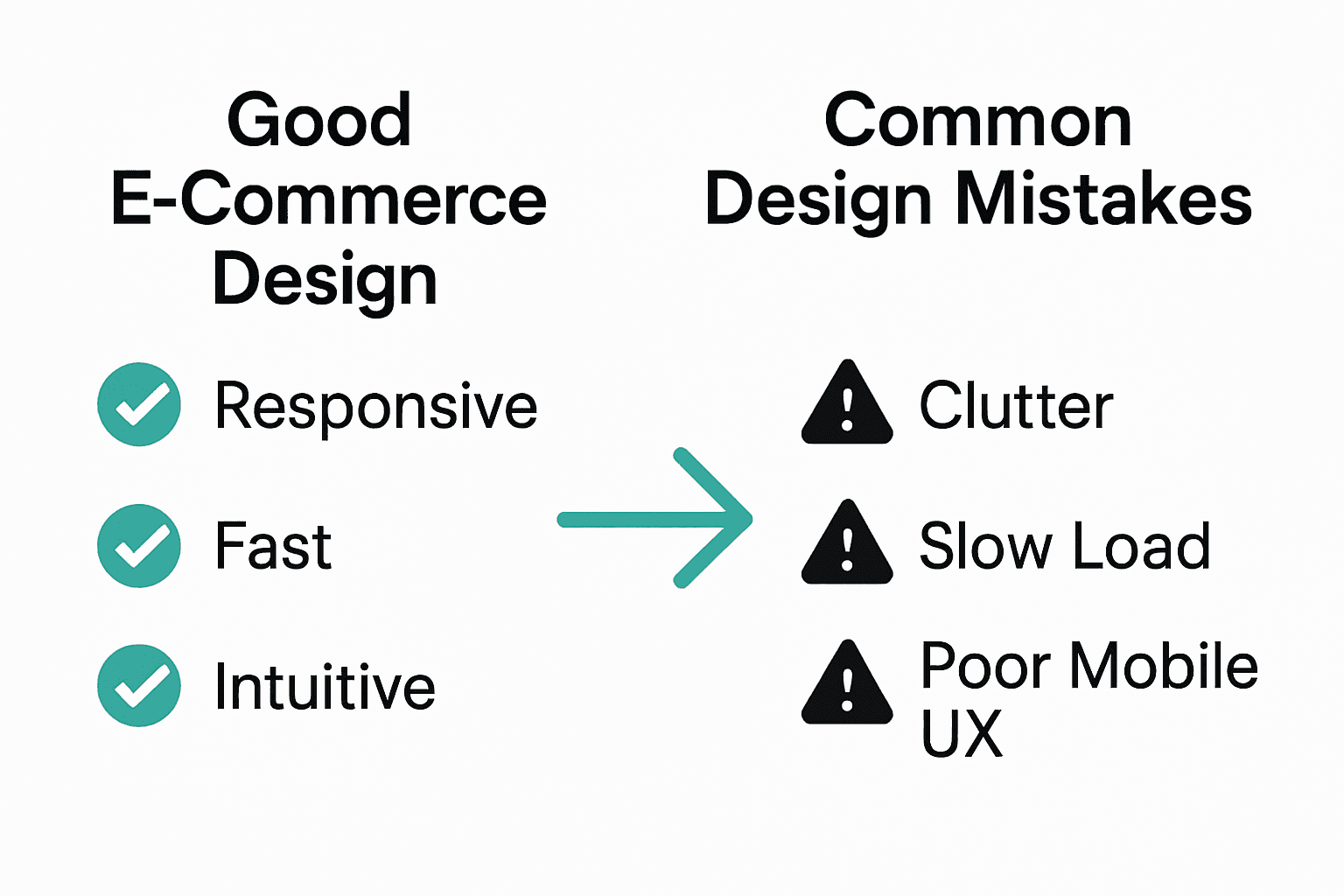
- Cluttered Interface: Overwhelming users with too much information
- Poor Mobile Responsiveness: Neglecting seamless cross-device experiences
- Complicated Checkout Processes: Creating unnecessary friction in purchasing
- Inconsistent Visual Branding: Lacking cohesive design language
- Slow Loading Speeds: Failing to optimize page performance
Navigation complexity represents another significant design liability. Users demand intuitive, straightforward pathways to products, with clear categories, robust search functionality, and minimal clicks required to complete transactions. Complicated menu structures or counterintuitive product hierarchies can instantly discourage potential customers. Discover expert web design strategies to transform these potential weaknesses into strategic strengths.
Successful e-commerce design isn’t about perfection - it’s about continuous refinement. By proactively identifying and addressing these common design mistakes, businesses can create more engaging, user-friendly digital experiences that not only attract customers but consistently convert and retain them.
Transform Your E-Commerce Design Into Sales and Loyalty
Struggling with cluttered interfaces, lost conversions, or shoppers abandoning their carts? Your e-commerce platform deserves a design that does more than look good. It should engage visitors, build trust instantly, and guide every customer effortlessly from browsing to purchase. The article highlighted how visual hierarchy, seamless UX, and conversion-oriented strategy are crucial for fighting user frustration and boosting your brand’s long-term value.

If you are ready to address the weak spots in your digital storefront, let the experts at Markupus help. Our team specializes in building modern, conversion-focused e-commerce experiences using ReactJS, NextJs, and advanced AI automations. We turn complex challenges like optimizing checkout flow, integrating responsive layouts, and using powerful modern design platforms into real-world results that mean higher sales and loyal customers. See how our recent case studies prove the impact of great design in e-commerce, or explore our guide to web design platforms to learn more. Redefine your online store and leave design mistakes behind by scheduling your project with us today.
Frequently Asked Questions
What are the key design types in e-commerce?
The core design types in e-commerce include Visual Design, which focuses on brand identity and aesthetics; User Experience (UX) Design, which ensures intuitive navigation; and Conversion-Oriented Design, which strategically guides users towards making purchase decisions.
How does design impact sales and brand loyalty in e-commerce?
Good design builds visual trust, fosters emotional connections, reduces cognitive load during decision-making, enhances perceived value, and helps differentiate brands. These factors contribute significantly to increased sales and improved customer loyalty.
What are some essential user experience principles for online stores?
Crucial UX principles for online stores include intuitive navigation, mobile responsiveness, fast loading times, simplified checkout processes, and clear product information, all of which help create a seamless shopping experience.
What common design mistakes should e-commerce sites avoid?
Common design mistakes include cluttered interfaces, poor mobile responsiveness, complicated checkout processes, inconsistent visual branding, and slow loading speeds. Avoiding these pitfalls is essential for maintaining a positive user experience.
Recommended
- Best ecommerce web design platforms – Expert Comparison 2025 | Markupus
- Development Archives | Markupus
- Modern Web Design Steps for Reliable Business Sites | Markupus
- Blog | Design and Development Insights from Markupus
- Effective Website Design: Key Principles and Proven Strategies 2025
- Why Invest in Web Design: Complete Guide for Business - ResponsiveWebsiteDesign